
What is CTR? And Why Is It Always Higher With Big Brands Than Startups?
Your ad is running daily to thousands with barely any clicks? The way to know the difference between an ignored ad and an engaged one lies in the CTR, click-through rate. So, what exactly is this metric? Why does it seem to be dominated by big companies while posing a challenge for startups? What affects it? And how to improve it?
What is CTR?
CTR is an abbreviation for Clicks Through Rate, and it represents the ratio of clicks on an ad compared to the number of times the ad was shown to the audience (impressions).
How to Calculate CTR?
By dividing the total number of clicks on the ad by the total number of impressions:
CTR = Total Clicks / Total Impressions
Why is CTR Important for You as a Business Owner?
The CTR is a direct reflection of your ad performance, it tells you whether you’ve chosen the right ad platforms, whether those platforms effectively connect you with your target audience, and whether your ad is engaging enough to drive action.
Here are 5 things CTR reveals to you:
- Audience Engagement: How well your ads resonate with viewers.
- Platform Effectiveness: Whether the advertising platform or search engine you’re using is truly the best for reaching your ideal customers.
- A/B Testing Insights: Which ad performs best, helping you decide to allocate more budget where higher conversions are.
- ROI Potential: Which ads are most likely to deliver the highest return on your investment.
- Website Traffic & Sales: A higher CTR means more visitors to your site, and more opportunities to convert them into paying customers.
In short, CTR isn’t just a metric, it’s your roadmap to smarter ad spending and stronger campaign results.
What Is a Good CTR on Average?
Click-through rate (CTR) is a dynamic metric that varies significantly by industry, year, and platform. These variations are evident not only across different advertising channels (e.g., Google Search vs. Meta vs. TikTok) but also within Google’s own ecosystem, such as differences between Google Search, YouTube, and Display Network ads.
2025 CTR Benchmarks at a Glance
In 2025, the average good CTR across industries was as follows:
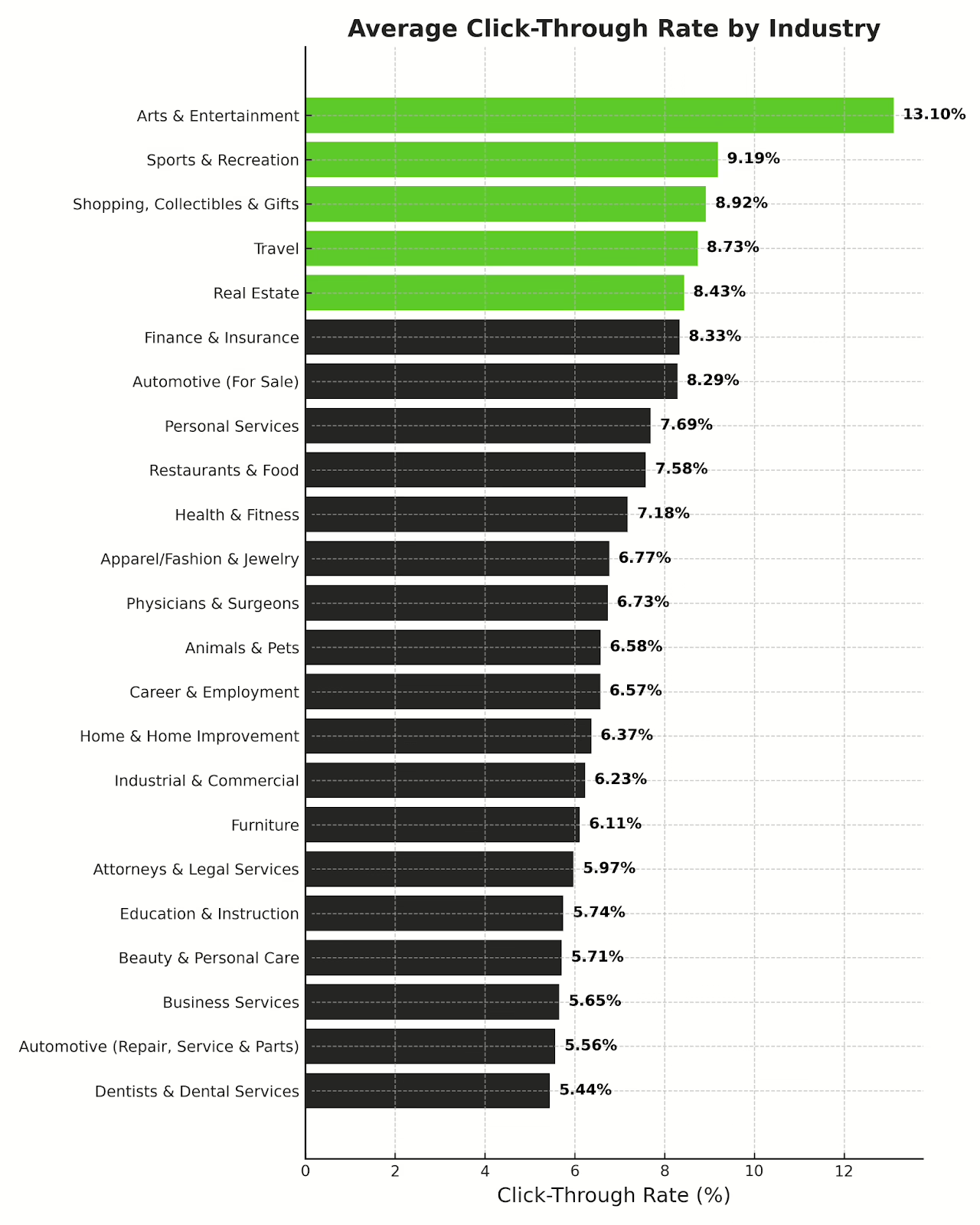
Average CTR across industries, via searchenginejournal
What Factors Affect Your Ad’s CTR?
- Competition: If you launched an ad to target a keyword like “external hiring” on Google, and you have 10 tough competitors bidding on the same keyword, your ad’s visibility may decrease, and the more competitors target the same keyword, the less chance you have.
- Ad Placement: According to Ahrefs, the top three ranking ads get 71% of all clicks.
- Pricing Strategy: Your ad bidding strategy also impacts CTR.
- Ad Copy Relevance: How close is your ad copy to the user’s search intent.
- Audience Targeting Accuracy: Which basically depends on the expertise of your advertising team.
Why Do Startups Have Lower CTRs Than Big Brands?
There are several factors contributing to this gap:
- Google Recognition
Known brands usually are recognized on Google because they continuously work on optimizing their websites and digital platforms to rank in search engines. And this is one reason to push them to the top, in both organic and paid search results. - Audience Recognition
The likelihood of users clicking on an ad for an LG refrigerator is much higher than clicking on an ad for a refrigerator from an unknown brand that didn’t earn their trust yet. - Retargeting
Retargeting involves showing new ads to an audience that has previously interacted with the company’s ads, or an audience that has previously placed orders. Startups, however, often lack an existing audience to retarget. - Ad Quality & Content Relevance
Known brands usually have historical data on the best keywords to target, and the most attractive offers to launch for each segment of their audience. - Google’s Quality Score
This measures the quality of your ad based on Google’s criteria, including:- The loading speed of your landing page.
- How relevant the ad copy is to what the target audience is actually searching for.
- And the expected CTR, if Google predicts your ad will have a low CTR, it will likely rank it lower.
However, if you own a startup, you can benchmark your ad performance against the general CTR average on Google and Microsoft ads across all industries, which reached 6.66% in 2025 (over the past 12 months), just to get a preliminary idea of the ad performance.

How Can You Improve Your CTR?
Here are 5 proven strategies to boost your click-through rate:
- Avoid keyword baiting – Select keywords that are meant for your products or services to attract qualified traffic. Relevance determines both ad performance and ranking potential, the tighter the match, the stronger your results.
- Craft high-impact headlines – Headline is the first thing users lay eyes on. Write clear, relevant, catchy and value-driven headlines that speak directly to searcher intent.
- Highlight your product’s unique value – Emphasize the distinct benefits and exclusive offers that differentiate your product in the marketplace. Clearly articulating these advantages strengthens your competitive edge and drives engagement.
- Incorporate strong CTAs – Use direct action phrases like “Shop Now” or “Get Started” to drive conversions.
- Utilize ad extensions – Enhance visibility with additional links, contact information, and promotional details.
- Conduct A/B testing – To identify top performers before scaling your budget.
Final Thoughts
CTR isn’t just a number, it’s your audience telling you whether your ad is worth engaging with, and to maximize your campaigns, you need an expert partner who unlocks strategic insights and delivers optimal ROI. Team Rosella is ready to support you with a customized plan tailored to your business goals. Contact us today!
Sources: