
Reason Why Ecommerce Platforms Read Your Mind, and How to Apply This in B2B
How does an ecommerce platform anticipate a product you’re thinking of buying without you uttering a single word, and even target you with ads? What tech have these online stores implemented to essentially read customers’ minds? Are there any ecommerce platforms in the Arabian region that offer these features? And crucially, how can these be implemented in the B2B sector? Let’s explore the revolutionary potential of Hyper-Personalization.
Understanding the Applications of AI Hyper-Personalization in Ecommerce
Hyper-personalization refers to an advanced capability where AI creates a complete -unique and customized- shopping experience for each single customer. This approach achieves unprecedented precision by analyzing real-time customer data, personal preferences, immediate behavior at the moment, and current purchasing intent, enabling the system to predict what a customer wants to purchase before they even initiate a search.
Moreover, when this AI tech integrates with automated ads, ecommerce platforms become able to launch precisely targeted ads to users who are actively considering their products. These ads also may include dynamically generated discounts, specifically designed to prompt immediate purchases.
Hyper-Personalization Targeting Goes Far Beyond Demographic One
Ecommerce moved far beyond basic demographic targeting like “men interested in video games” or “women over thirty”. Modern hyper-personalization can pinpoint you in person, recognizing patterns such as your increased likelihood to purchase a specific type of premium coffee, regularly between the 15th and 17th of each month during noon hours. The system then serves perfectly timed ads on your frequently used platforms, complete with streamlined one-click purchasing options.
This explains those remarkably well-timed messages from ecommerce brands that appear precisely when you’re contemplating a purchase.
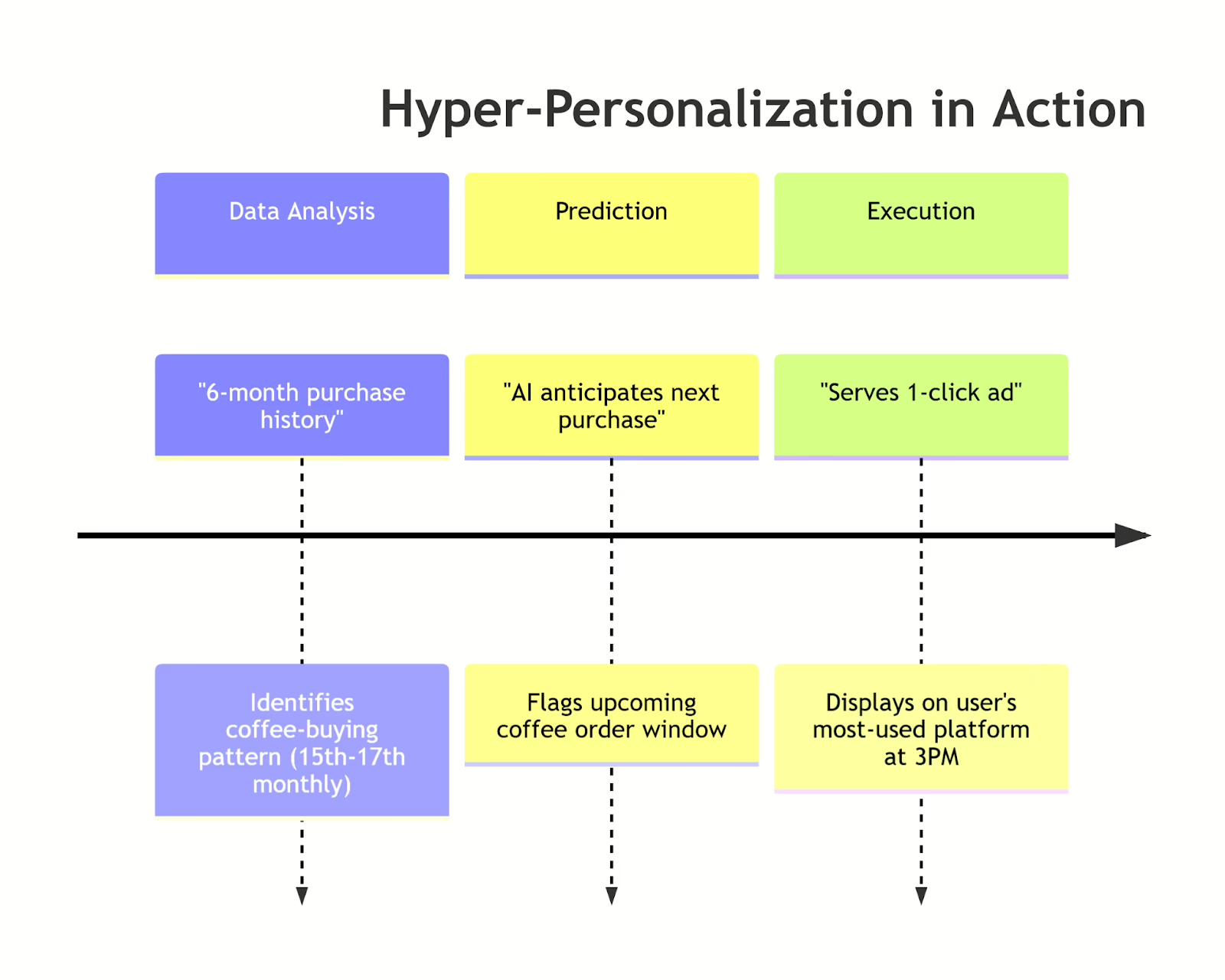
The Technology Behind the Hyper-Personalization
Hyper-personalization operates through two primary technological components:
- Continuous analysis of your live behavioral data, including your current location, active devices, and real-time phone applications that you’re using right now.
- Sophisticated sentiment analysis of your online interactions, communications, and conversations to interpret your emotions and intent.
The Arabian Ecommerce Platforms That Implement Hyper-Personalization
Several prominent Arabian ecommerce platforms have successfully implemented some hyper-personalization levels:
- Zid (Saudi Arabia)
- AI-powered product recommendation systems (e.g., suggesting athletic socks to users browsing sneakers).
- Automated advertising integration with Snapchat and Instagram targeting engaged users.
- Salla (Saudi Arabia)
- Advanced customer purchase pattern analysis.
- Seamless integration with Google Analytics for enhanced data insights.
- Namshi (UAE)
- Dynamic homepage customization based on gender and brand preferences.
- Note: Currently limited to their marketplace and not available for independent storefronts.
B2B Applications for Hyper-Personalization in eCommerce and Digital Marketing
Hyper-personalization revolves around delivering individualized experiences, and in the B2B sector, it targets decision-makers and business owners. It goes beyond simply selecting sales channels and displaying tailored content, it also involves fine-tuning your brand’s visual elements, messages, style, and pacing to align with each client’s unique preferences.
Businesses can implement different levels of hyper-personalization to enhance engagement, ranging from a broad market approach to an interest-based precise approach.
Also, hyper-personalization becomes a brilliant strategy for B2B marketing when powered by Generative AI, to intelligently generate dynamic content copy that speaks the language of every single type of customers. It enables the creation of thousands of dynamic text and image variations, ensuring each piece of content resonates deeply with its intended recipient and maximizes interaction.
Here Are 3 Popular Hyper-Personalization Applications in B2B Ecommerce and Digital Marketing:
1. Creating Dynamic Content Based on User Behavior
Dynamic content delivers a personalized experience that instantly adapts to user behavior. This approach relies on analyzing data such as browsing history, engagement rates, and past visitor activity to ensure the content perfectly aligns with their interests.
One of the intelligent applications of this tech is the Content Remix tool on HubSpot platform, which can automatically transform a single blog into 50 versions tailored to different industries. We also see simple applications for this approach on some Arabian B2B platforms, such as redirecting a visitor who downloaded an e-book to a related case study on their next visit, or the way Zain Business customizes promotional materials for each user segment.
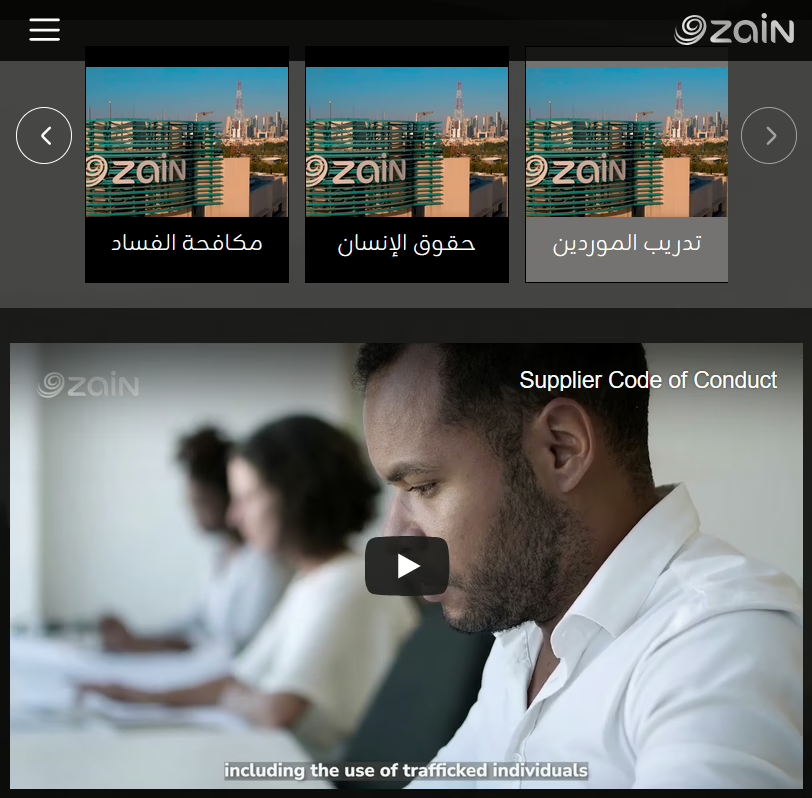
A snapshot of Zain Business platform showing dynamic content implementation on the suppliers’ page.
When a B2B customer finds content that matches their immediate needs and current interests, engagement with the brand becomes seamless, effectively converting casual visitors into loyal clients. This strategy relies on a deep understanding of B2B purchasing behaviors and delivering the right solutions at the right time.
2. Account-Based Marketing (ABM) Integration with Hyper-Personalization
Account-Based Marketing (ABM) focuses on targeting specific high-value business accounts through coordinated marketing, advertising, and sales efforts. ABM strategy becomes significantly much more powerful when integrated with hyper-personalization, delivering higher-value marketing outcomes and substantially improving return on marketing investment.
Basic Applications of Integrating ABM with Hyper-Personalization
- Developing customized messages that resonate at every touchpoint in the buyer journey, along with designing the funnel that works best for that business account interactions with these messages.
- Customizing a landing page for specific accounts, displaying solutions tailored to each client’s needs.
- Personalizing emails to be sent directly to decision-makers addressing their specific business challenges.
This level of personalized targeting for business leaders and decision-makers helps deepen your business relationship with each client and increases their engagement with your brand, which is extremely crucial in complex B2B sales cycles, especially when targeting multiple decision-makers and executives across different industries at the same time.
3. Real-Time Personalization is Also One of the Hyper-Personalization Applications in B2B Ecommerce and Digital Marketing
Real-time personalization delivers instant customized responses to user actions, including adapted content and offers to precisely match the user’s current behavior. Examples:
- When a user clicks a pricing page, a chat window pops up with offers matching their profile and interests.
- Also, if they open an email from your company, AI automatically adjusts follow-up messaging to align with users preferences.
How does this real-time personalization work?
- It reads the business client’s current behavior: identifying exactly what they’re searching for at this very moment.
- It adapts instantly: modifying offers and content during the customer’s browsing session to match their needs.
- The customer feels it’s designed specifically for them: as if your digital platform has become a personal assistant for this business user.
Are There Any Arabian B2B Ecommerce Platforms That Implement Hyper-Personalization?
Certainly there are digital marketing agencies that offer adding hyper-personalization capabilities for your own digital platforms, your ad campaigns, and your e-commerce stores. As for Arabian e-commerce platforms generally, many are still developing this strategy, and their rapid progress is expected very soon.
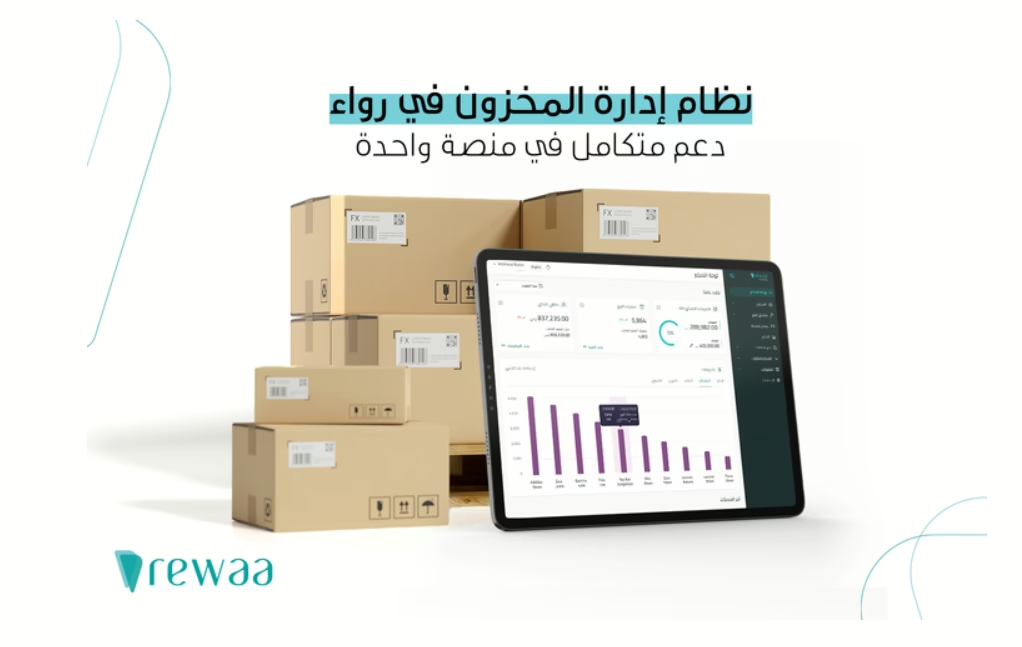
Globally, there are indeed B2B e-commerce platforms utilizing hyper-personalization, like Alibaba, though they remain less advanced than B2C applications. Most offer RFQ (Request for Quote) features tailored for business purchasing activities, which is a major functionality on Arabian B2B e-commerce platforms too, just like Jumla. These platforms focus on standard personalization with higher-priority business needs such as:
- Inventory management.
- Recurring invoice tracking.
- And price negotiations.
Critical Strategic Insight
True hyper-personalization requires robust AI integration to achieve its full potential. Businesses serious about implementing these technologies should consider partnering with a specialized digital marketing agency that provides complete AI-powered solutions.
For Ambitious Business Leaders Looking to Elevate Their Digital Platforms:
Contact Rosella, the leading Digital Marketing Agency that unlocked superior growth potential for many businesses in the Arabian Gulf, Africa, and part of the European region. Reach out to Rosella’s team now.
Sources:
- McKinsey reports on the digital transformation of Namshi Ecommerce platform.
- Forbes.com
- Foleon.com
- Sherwen.com